A garden that works well relies less on the number of plants or furniture than on the coherence between the soil, exposure, and the actual uses of the land. Successfully designing your garden means first accepting the constraints of the site before choosing what to install. Orientation, soil type, local rainfall patterns: these three parameters determine almost everything, from the types of viable plants to the placement of a terrace.
Soil and permeability: the parameter that most plans ignore
Before laying out paths or installing a wooden terrace, test the absorption capacity of your land. Clay soil retains water on the surface and creates persistent puddles. Sandy soil drains too quickly and dries out roots in just a few days without watering.
The texture of the soil also conditions the choice of materials. Laying impermeable slabs on already poorly draining land exacerbates runoff problems. Conversely, a permeable surface like stabilized gravel or open-joint pavers allows water to infiltrate and reduces pressure on neighboring flowerbeds.
Have you noticed that some lawns remain soaked three days after rain while others dry out in a few hours? The difference is rarely due to slope. It comes from the soil structure in the top thirty centimeters. A simple test involves digging a thirty-centimeter hole, filling it with water, and measuring the drainage time. If the water stagnates for more than an hour, plan for drainage or orient your plantings towards moisture-loving species.
Considering permeability from the start is what distinguishes a sustainably functional garden from a design that will need to be redone after two winters. To delve deeper into designing with Graine de Jardinier, the topics of drainage and soil preparation are covered in detail.
Watering restrictions and choosing drought-resistant plants
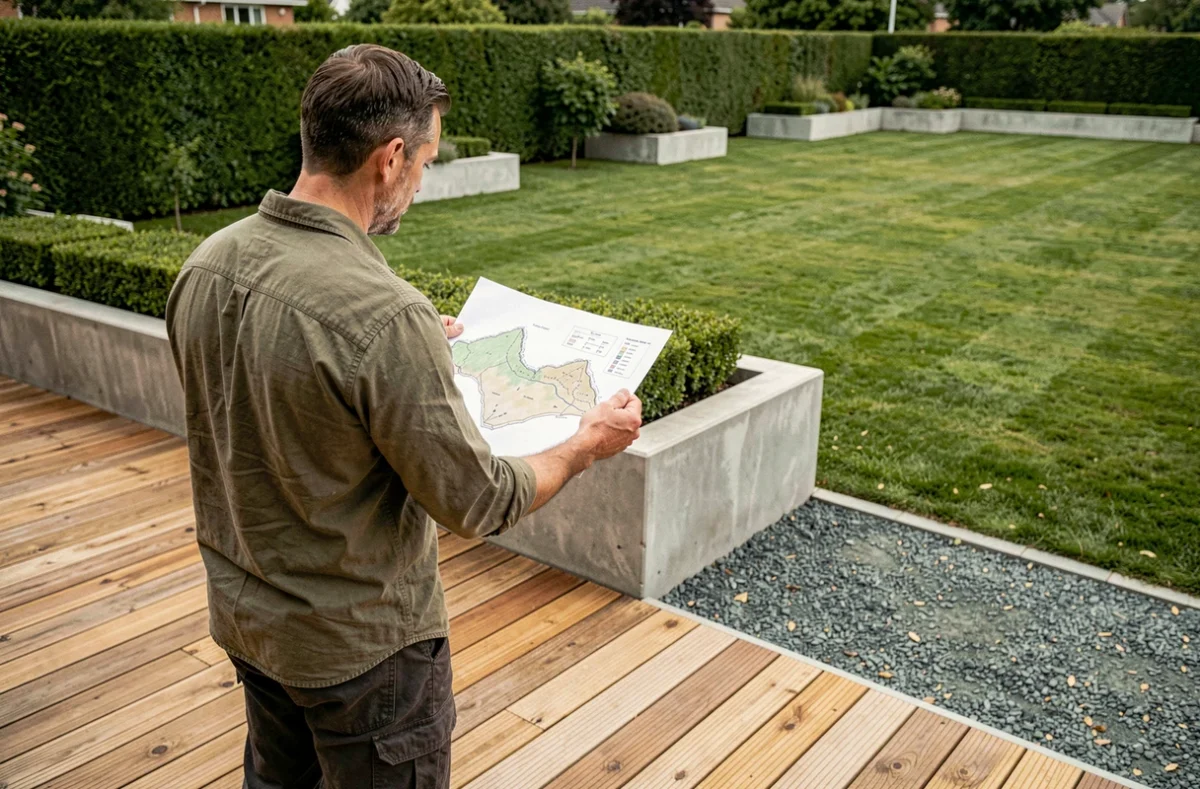
France applies four levels of drought (vigilance, alert, heightened alert, crisis) that can limit or even prohibit watering lawns, flowerbeds, and potted plants. These restrictions vary by region and change rapidly through prefectural decree. The government site VigiEau allows you to check the measures applicable to your address.
A garden designed without considering water restrictions will be the first to suffer. Instead of relying on water-hungry English grass, consider suitable ground covers: creeping thyme, sheep fescue, yarrow. These plants can tolerate several weeks without water once well-rooted.
According to an Ifop barometer for Unep from March 2025, 84% of French people had already changed their gardening practices in response to climate change or were considering doing so. Among the most cited responses: rainwater harvesting and choosing drought-resistant plants.
Criteria for selecting water-efficient plants
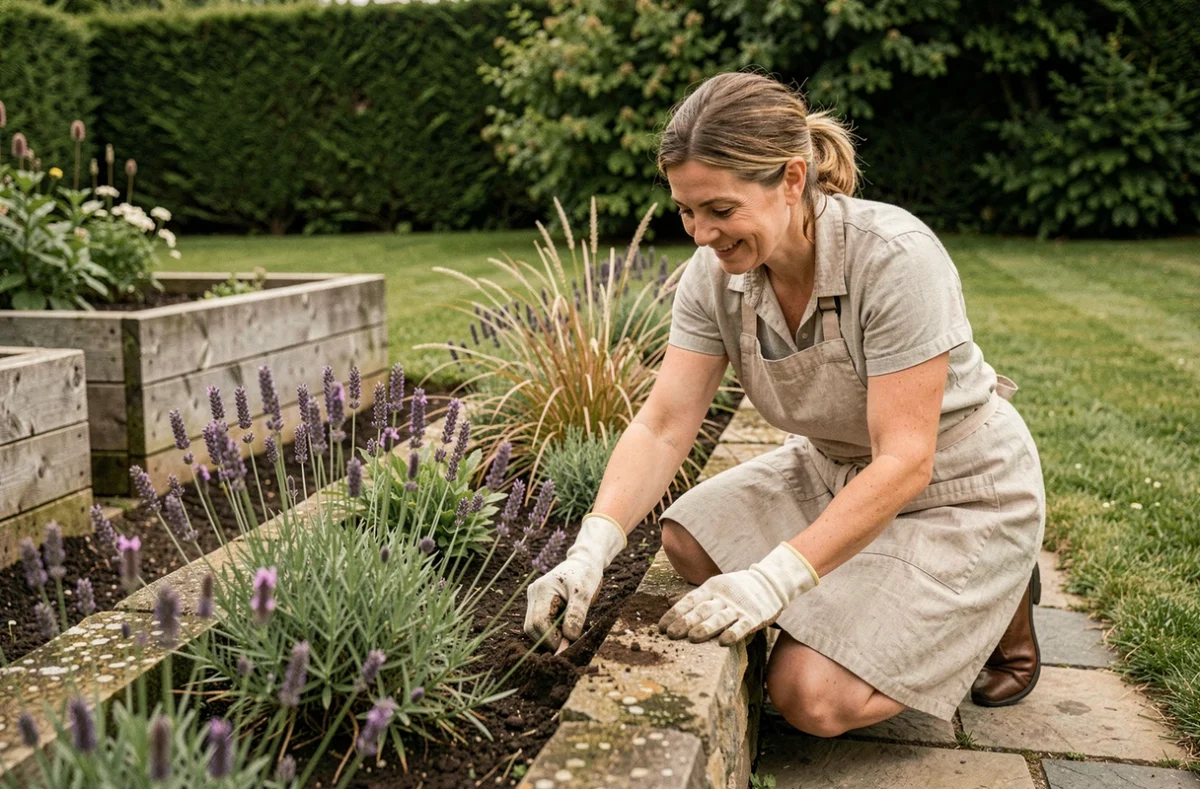
- Geographic origin: Mediterranean plants (lavender, rosemary, rockrose) or ornamental grasses (stipa, miscanthus) naturally withstand dry summers.
- Deep root system: a taproot shrub seeks moisture deep down, while a shallow root system relies on regular watering.
- Systematic mulching: a layer of organic or mineral mulch reduces soil evaporation and limits the water needs of each flowerbed.
Mulching is not just an aesthetic detail. It provides thermal protection for the soil. Without it, bare soil can reach temperatures that scorch surface roots.
Creating garden zones without multiplying materials
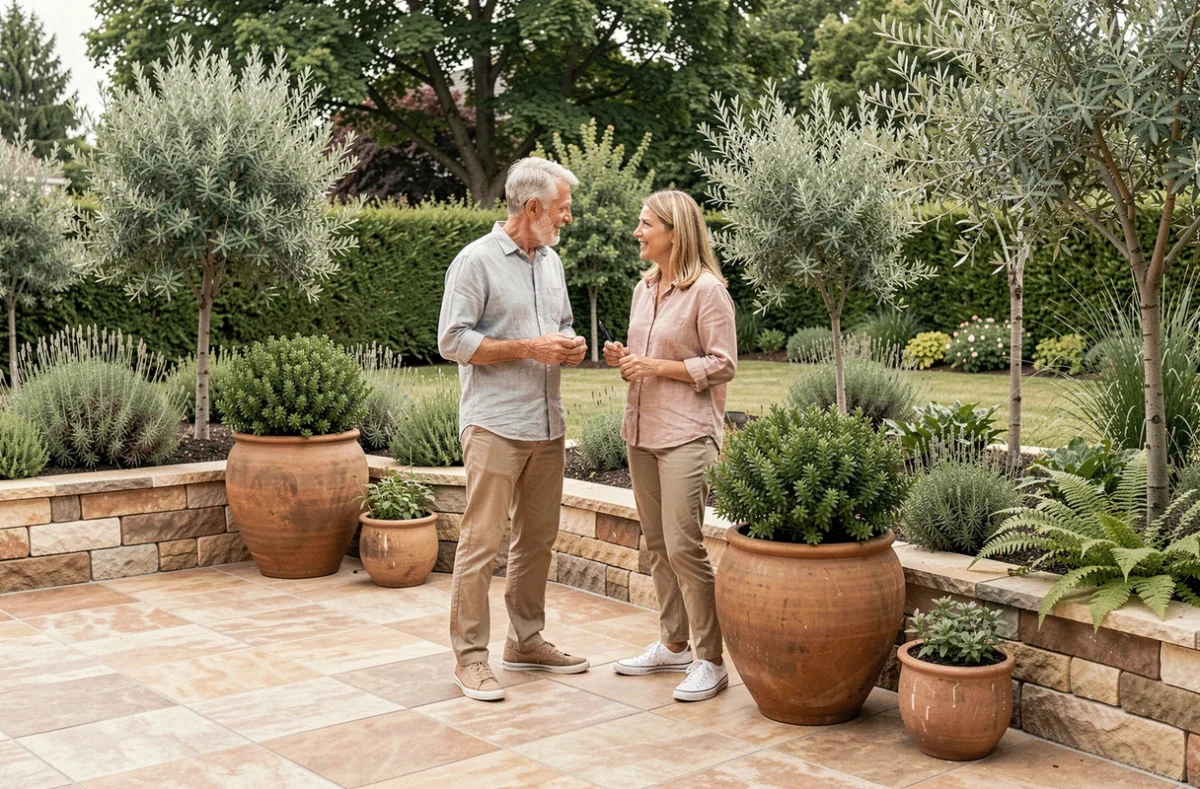
An harmonious garden does not require ten different surfaces. Limiting the palette to two or three materials creates immediate visual unity. For example: wood for the terrace, light gravel for pathways, natural stone for flowerbed borders.
Why this choice? Each added material introduces a junction, a connection, a visual transition. Three well-placed materials yield a clean result. Six poorly matched materials create a tiring patchwork for the eye.
Defining spaces by levels rather than fences
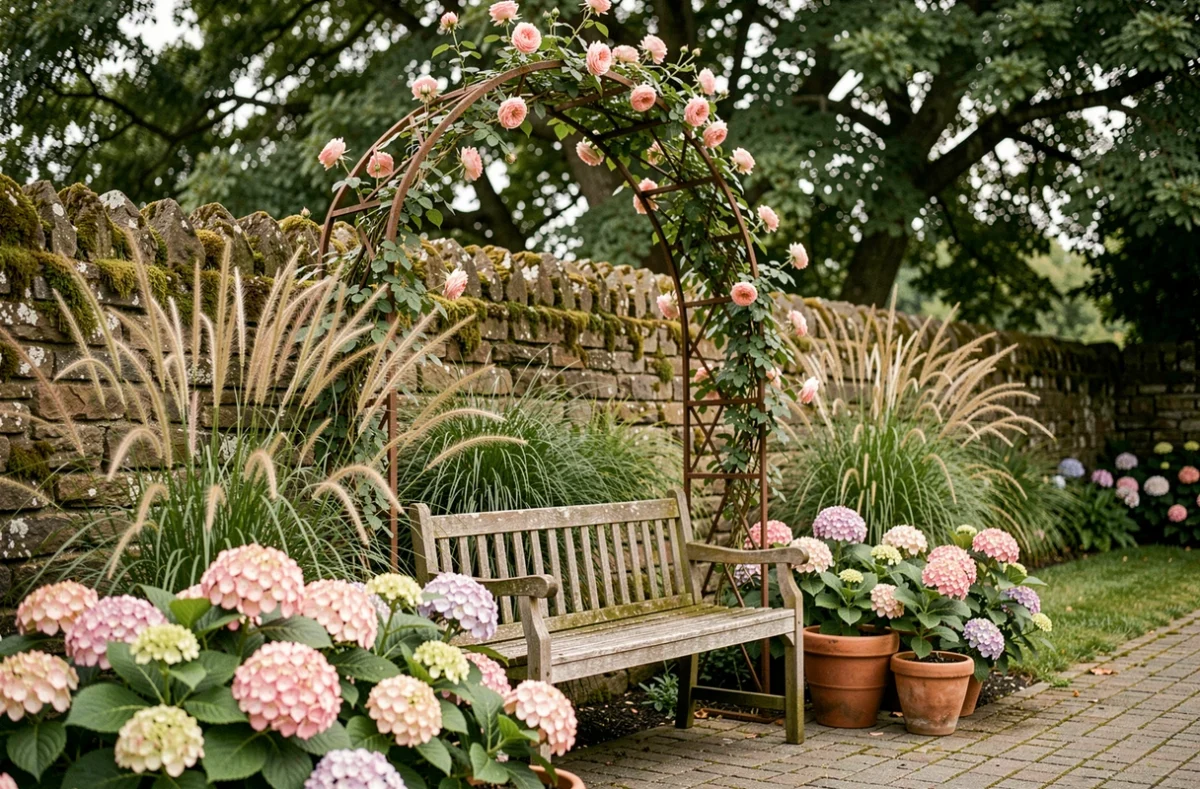
Playing with height differences structures a garden more effectively than a hedge or a border. A raised terrace twenty centimeters above the lawn naturally marks the transition between the dining area and the green space. A slightly raised flowerbed draws the eye and creates depth without any built elements.
The difference in level guides the gaze and movement without a physical barrier. This principle also works in small gardens, where a simple step between two areas is enough to give the impression of a larger space.
Outdoor lighting and biodiversity: finding the right balance
Garden lighting poses a rarely addressed dilemma. Too much light at night disrupts pollinating insects and nesting birds. Not enough, and your paths become dangerous after dark.
The solution lies in targeted lighting directed downward. Low bollards along pathways are sufficient for safety. However, powerful spotlights directed at the tree canopy disrupt the nocturnal cycles of local wildlife.
- Favor warm color temperature fixtures (around 2700 K), which are less attractive to insects than cool white light.
- Install motion detectors in passage areas rather than permanent lighting.
- Turn off decorative lights after a certain hour, especially between April and September, during the nesting period.
A garden designed as an ecosystem, not just as decor, retains its natural allies: hedgehogs, blue tits, ladybugs. They are the ones who regulate pests without chemical intervention.
The design of a garden does not end on the day the last plants are in the ground. An outdoor space evolves with the seasons, climate, and growth of plants. Checking soil permeability every autumn, adapting plantings to local water restrictions, reducing nighttime lighting: these simple actions extend the coherence of a well-designed garden over several years.