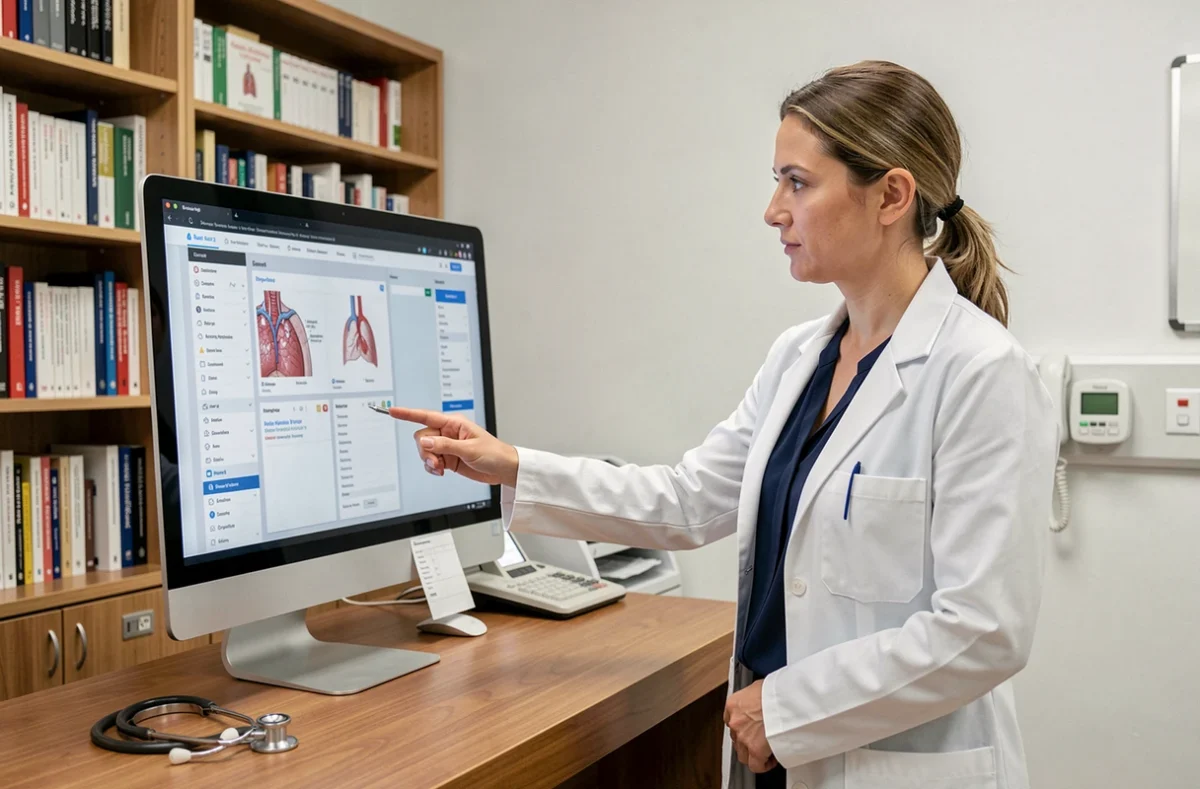
A general practitioner spends a significant part of their day on tasks that do not directly relate to patient care: clinical documentation, regulatory follow-up, coordination with other professionals. Digital tools dedicated to the medical sector are multiplying, but not all meet the same constraints. Choosing an appropriate health resource requires understanding what distinguishes a simple management software from a solution that complies with French and European regulatory requirements.
Regulatory compliance of health tools: what the EHDS regulation changes
Most comparisons of medical tools focus on visible features: scheduling, billing, patient records. They overlook a criterion that will increasingly weigh in the choices of healthcare facilities.
The European regulation on the European Health Data Space (EHDS), which came into effect on March 26, 2025, imposes a progressive compliance framework for electronic medical record systems. The first substantial obligations will apply starting in March 2027, with mandatory exchange of patient record summaries and electronic prescriptions between member states expected by March 2029.
In practical terms, software that manages patient records will need to demonstrate its ability to adopt the European exchange format. This is no longer an option or a sales argument; it is a regulatory trajectory. Before choosing a tool, you can check the resources available on the Guide de Santé website for professionals, which gathers targeted information by specialty.
This criterion of European interoperability should be included in any evaluation grid. A publisher that does not communicate its EHDS roadmap represents a risk of forced migration in the coming years.
Tools for medical documentation assistance: beyond voice dictation
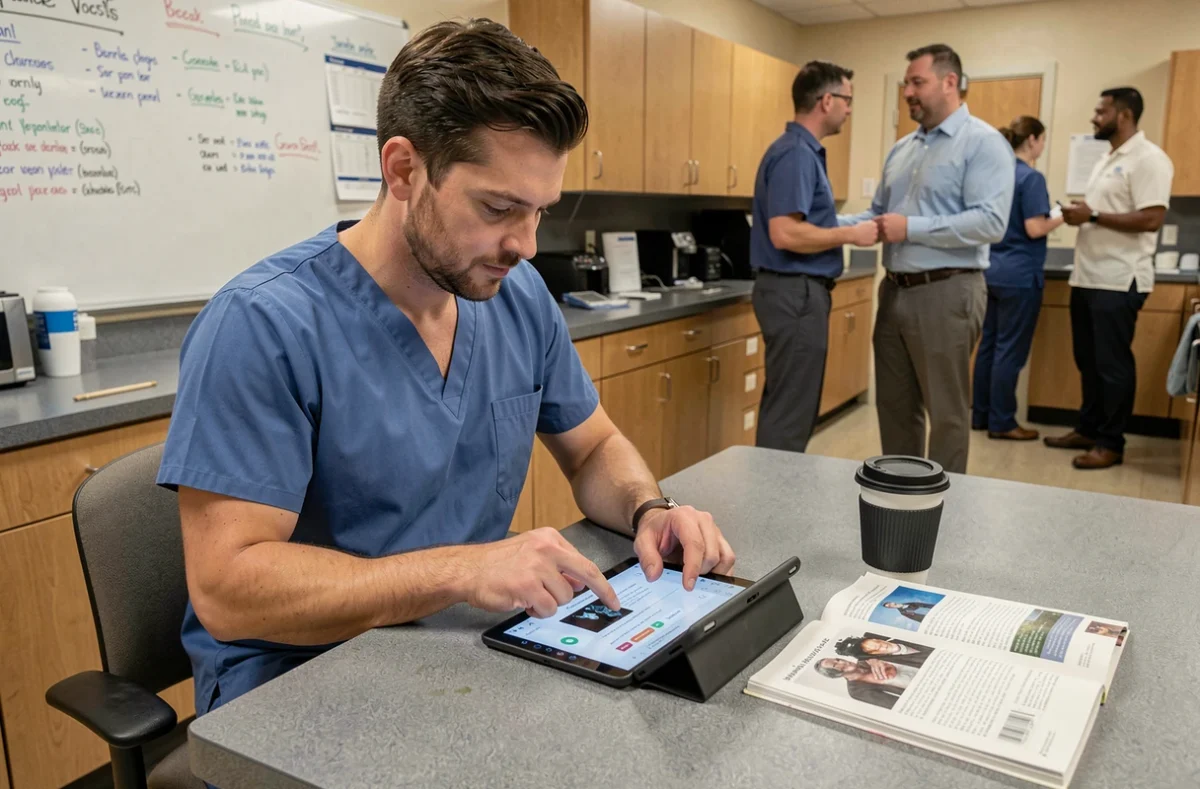
Have you already noticed the time spent writing reports after each consultation? AI-based medical documentation assistants aim to reduce this burden.
Nabla, for example, works as an assistant that listens to the doctor-patient exchange and generates a draft of clinical notes. Nuance Dragon Copilot, developed by Microsoft, automates the production of notes from audio conversations in hospital settings.
Human validation remains mandatory in all cases. None of these tools replace clinical judgment. Their value lies in reducing administrative time, not in decision-making.
Here are a few criteria to check before adopting a documentation assistant:
- Data hosting must be provided by a certified HDS (Health Data Host) provider, a non-negotiable condition in France
- The quality of transcription heavily depends on the sound environment, which limits use in noisy offices or during consultations with multiple participants
- The business model varies between monthly subscription and usage-based billing, with pricing structures not always publicly available
Management of authorizations and competencies in healthcare facilities
In a hospital or nursing home, scheduling is not just about filling slots. Each professional assigned to a position must have up-to-date authorizations: emergency response certification, specific certifications, validated DPC training.
The blind spot in the sector remains the intersection between authorizations and assignments. When a certification expires, the professional is often still scheduled without anyone being alerted. The consequences range from legal risks to endangering patients.
Tools like Zola maintain a registry of authorizations and trigger alerts before expiration. Octime manages work cycles and internal replacements. Hublo intervenes for last-minute reinforcements. Each covers a specific aspect, none cover the entire HR chain.
Why a single software solution is not enough
The medico-social sector operates with complex collective agreements, fragmented funding (ANFH, OPCO Santé), and regularly evolving HAS requirements. A publisher that claims to manage everything in a single interface simplifies reality at the expense of compliance.
The most reliable strategy is to articulate several specialized software components, ensuring they communicate with each other. This is less appealing than an all-in-one solution, but it is what works in practice.

Secondary use of health data: an emerging criterion for professional tools
The EHDS regulation is not only about direct care. It also organizes controlled access to pseudonymized or anonymized data for research, innovation, and public policy. National data access bodies will be responsible for overseeing these uses.
Professional tools will need to integrate controlled export and traceability functions. A patient record software that does not allow exporting data in a standardized format, with integrated pseudonymization and fine management of permissions, will become a hindrance.
For a department head or quality manager, this means asking an additional question to each vendor: how does your solution manage data export for secondary use in compliance with the European framework? The absence of a clear answer is a warning sign.
Practical criteria for evaluating a health tool in the French context
Before comparing features, five points should be systematically checked:
- HDS accreditation of the host: a legal requirement for any storage of personal health data
- LAP certification (Prescription Assistance Software) for tools that include medication prescription assistance
- DMP compatibility: ability to create, consult, and feed the Shared Medical Record
- Published or at least communicated EHDS roadmap by the publisher
- SESAM-Vitale accreditation for the dematerialization of care sheets
These criteria are not always listed on the first page of publisher websites. They often need to be explicitly requested, which in itself is a test of transparency.
The choice of a health tool is no longer solely based on ergonomics or price. The ability of a publisher to keep up with European regulatory developments now distinguishes sustainable solutions from those that will require replacement in the short term. It is better to ask the right questions now than to manage a forced migration in two years.