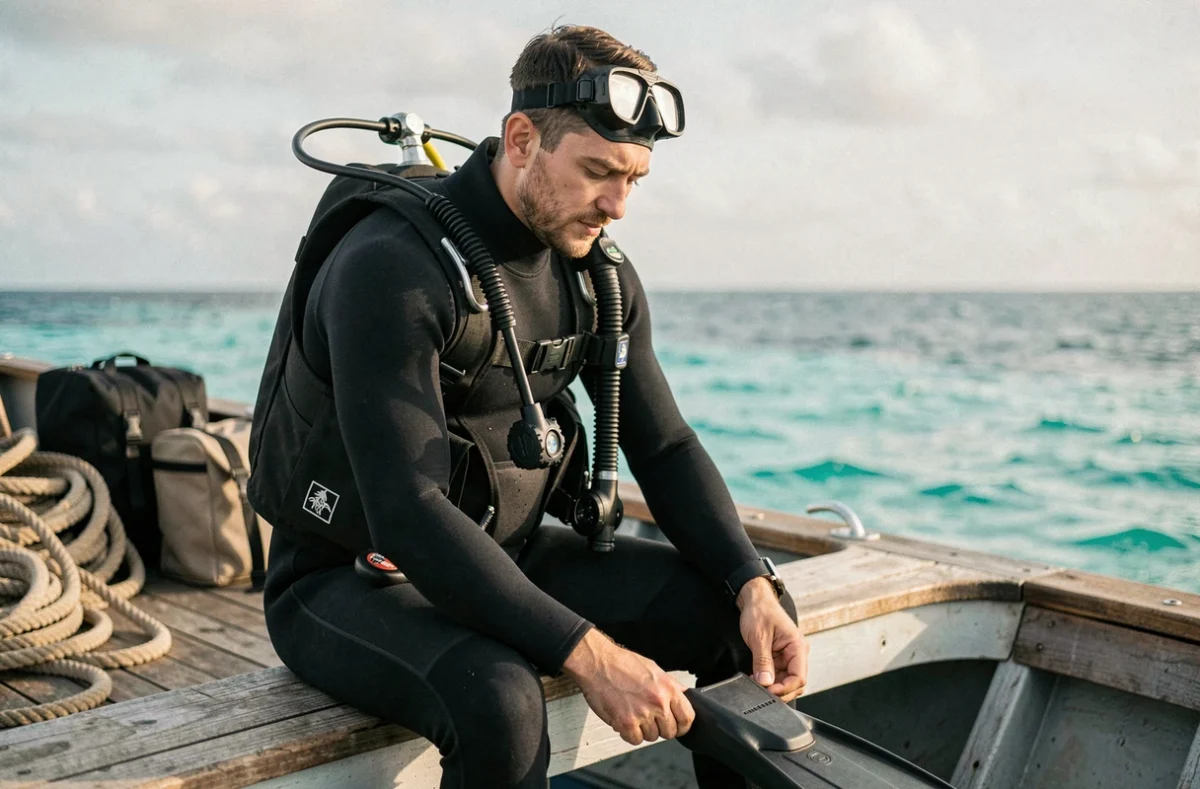
The distinction between types of diving is not just about choosing a destination or sensation. It involves physiological constraints, a regulatory framework, and radically different technical skills. Here, we detail the specifics that really matter before getting into the water.
Gas Management and Physiological Limits According to the Type of Diving
Each discipline imposes a different relationship with the breathing gas, and it is this parameter that structures everything else: depth, duration, equipment, risk.
In compressed air diving, the diver breathes a mixture of about 21% oxygen and 79% nitrogen. Nitrogen dissolves in the tissues proportionally to the ambient pressure. The management of decompression stops directly results from this phenomenon. A dive computer calculates in real-time the saturation of the tissues and indicates the ascent rate to be respected.
In freediving, the issue is the opposite: no gas is carried, so there is no risk of pulmonary overpressure during ascent. The main danger is hypoxic syncope, related to the drop in blood oxygen levels at the end of the dive. The equipment is limited to a mask, long fins, and a suit suitable for the temperature.
Nitrox (enriched air mixture) further modifies the equation. By increasing the fraction of oxygen, the proportion of nitrogen is reduced, thus lowering the risk of narcosis and decompression constraints. In return, the maximum depth decreases to avoid oxygen toxicity under pressure. A Nitrox diver must analyze their mix before each dive and set their computer accordingly.
Those who wish to explore Sortie 24 in detail will find a complementary overview of practices and their respective characteristics.
Diving in Open Water or Confined Environments: Two Practices, Two Trainings
Diving in open sea and diving in caves or penetrable wrecks require distinct training. In open water, the diver always has direct access to the surface. Risk management relies on adhering to tables or the dive computer, monitoring the tank pressure, and mastering buoyancy.
In cave diving or closed wreck diving, access to the surface is physically blocked. The diver operates in an environment where visibility can drop to zero in seconds if sediments are disturbed. The one-third rule applies to gas management: one-third for the outbound journey, one-third for the return, one-third as reserve. The equipment includes at least a reel, redundant lighting, and a configuration of double or side-mounted tanks.
We recommend never crossing the threshold of a cavity without specific training. An Open Water or Level 1 certification does not allow penetration into confined environments, regardless of the number of dives logged.
The Particular Case of Drift Diving
Drift diving is practiced in open water, but the current imposes particular logistics. The boat does not anchor: it follows the bubbles of the divers on the surface. Each participant must carry a highly visible safety buoy and know how to deploy it at the required depth.
Buoyancy must be mastered from the moment of entry into the water, as the current allows no time for adjustment. Inadequate weighting leads to either a bottom crash or an uncontrolled ascent.
Snorkeling, Static Apnea, and Deep Apnea: Technical Clarifications
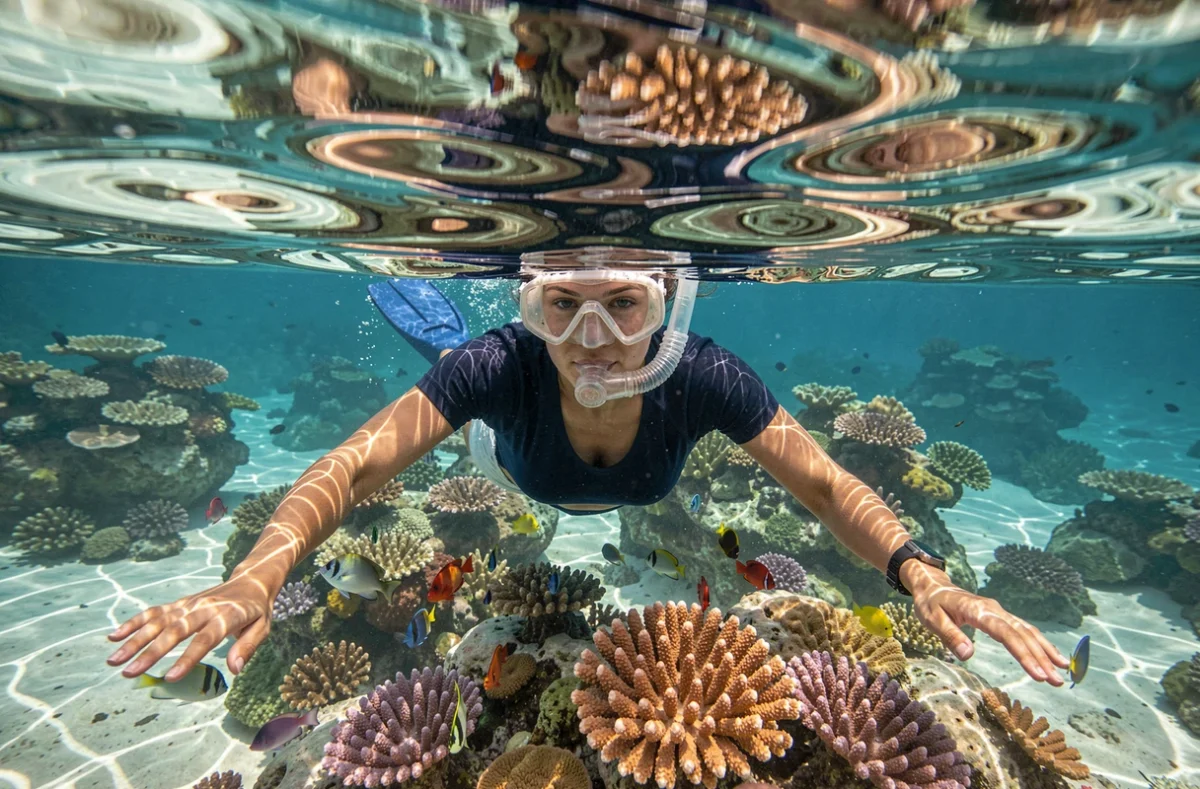
Snorkeling is often presented as a risk-free activity. In practice, it deserves particular attention on two points:
- The classic snorkel generates a dead air space. The longer or wider the snorkel, the greater the volume of non-renewed air, leading to CO2 buildup and a feeling of breathlessness in inexperienced practitioners.
- Hyperventilation before a snorkeling dive is a common mistake. It delays the sensation of needing to breathe without increasing oxygen reserves, raising the risk of syncope.
- Wearing short, flexible fins is sufficient for recreational snorkeling. Long apnea fins are designed for a specific undulation and are not suitable for surface kicking.
Deep apnea (free immersion, constant weight, variable weight) requires structured training. The pressure equalization technique in the middle ear changes beyond a certain depth: the Valsalva maneuver becomes ineffective, and the Frenzel, followed by the BTV (voluntary tubal opening), takes over. Mastering these equalization techniques is essential for any progress in depth.
Medical Certificate and Post-Dive Effort: Two Underestimated Regulatory Points
In France, the medical certificate remains mandatory for underwater diving, including cave diving. This requirement distinguishes diving from the vast majority of federal sports disciplines, where a simple health questionnaire is now sufficient. The recent reform has not changed this regime specific to activities classified with particular constraints.
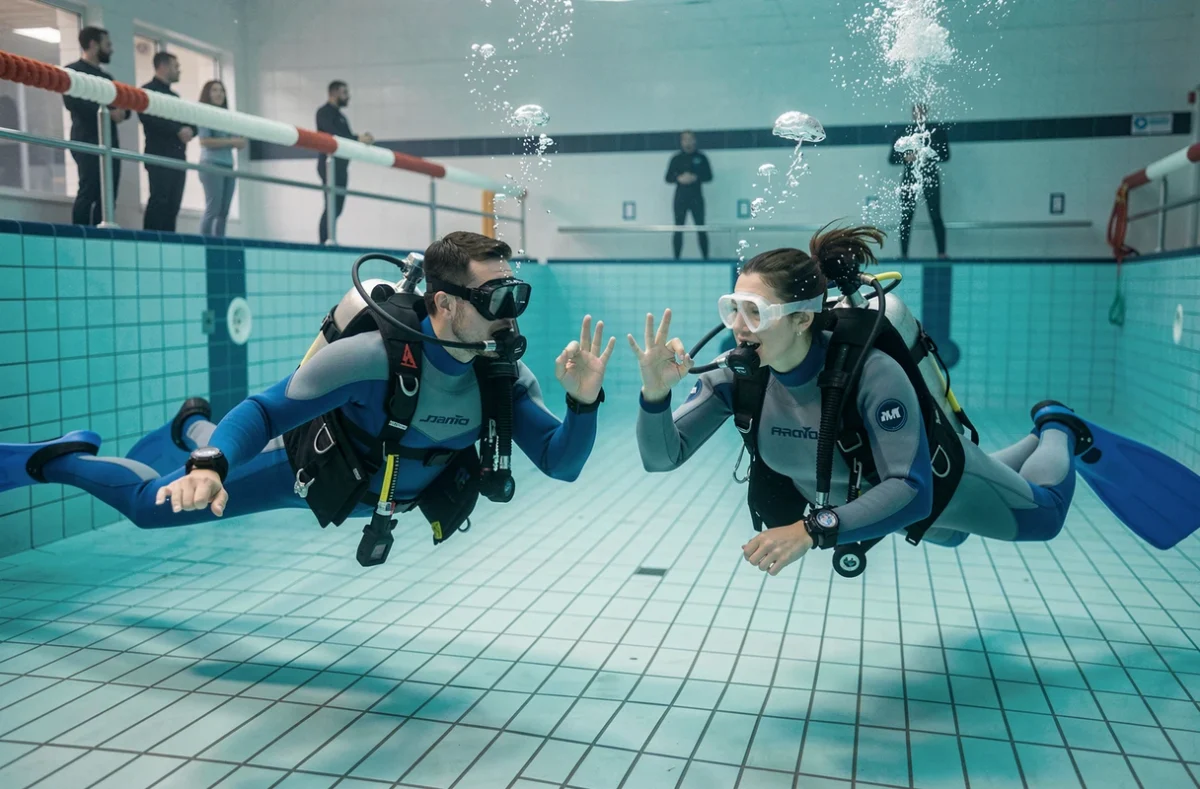
The second point concerns the management of effort after immersion. The recommendations from the Divers Alert Network (DAN) emphasize the need to reduce physical effort during and immediately after diving. Specifically:
- Avoid carrying your tank during the ascent to the boat (let the crew handle it).
- Do not engage in intense physical activity in the hours following the exit from the water.
- Limit the intensity of any effort underwater to reduce the production of micro-bubbles of nitrogen in the tissues.
This post-immersion protocol significantly reduces the risk of decompression accidents. However, it remains absent from many guides aimed at beginners.
The choice of a type of diving thus involves much more than a preference for reefs or caves. The nature of the breathing gas, access to the surface, the equalization technique, and the medical-regulatory framework form a coherent set. We advise considering each of these parameters before choosing a training path, rather than relying solely on the allure of an underwater environment.