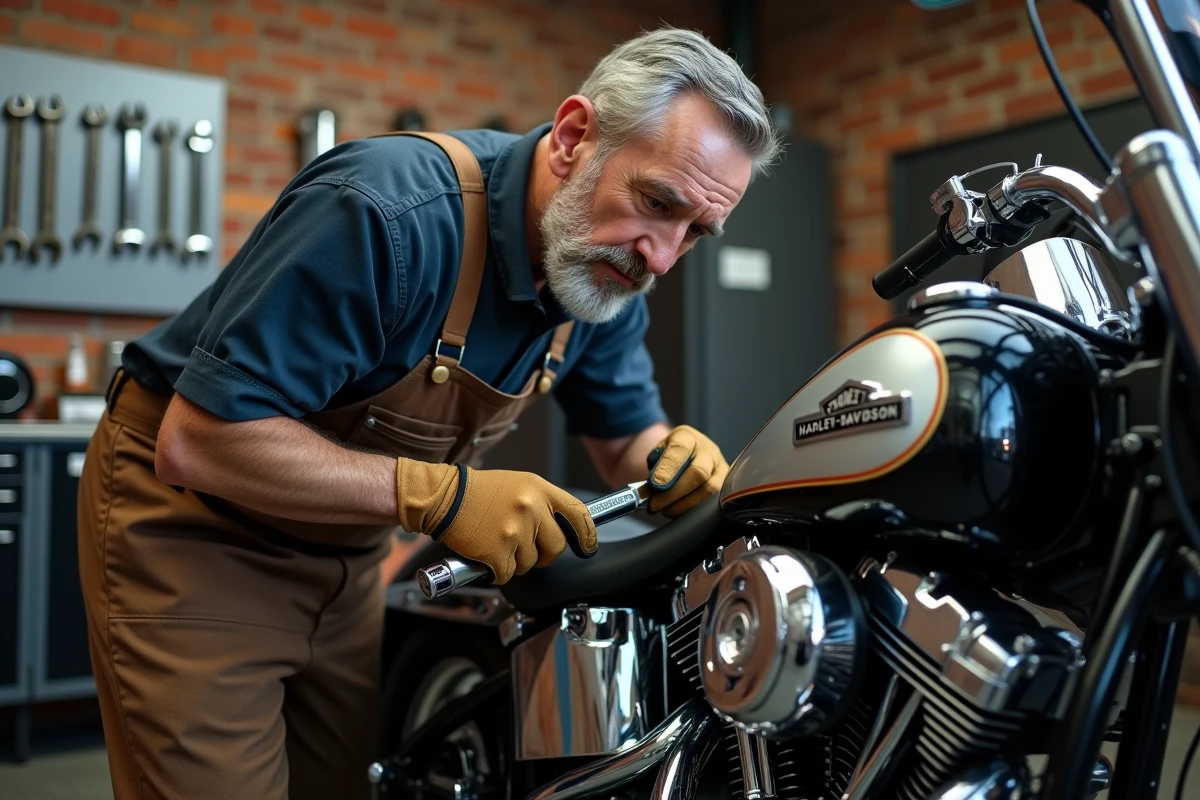
The engine block of a Harley-Davidson influences both the riding pleasure and the long-term ownership costs. Between the Twin Cam produced for nearly twenty years and the Milwaukee-Eight that replaced them, reliability gaps are not just a matter of model year. Understanding the thermal constraints, the timing, and the electronic management of each architecture allows for an informed choice.
Thermal Constraints and Euro 5 Mappings on Harley V-Twins
The air-cooled or air/oil-cooled Harley V-Twins are structurally sensitive to heat. In urban traffic, the temperature of the rear cylinder rises quickly due to insufficient airflow.
The problem has worsened with Euro 4 and then Euro 5 homologations. The engine mappings imposed to comply with these standards are very lean in fuel at low RPM, which increases combustion temperature. Since the early 2020s, many European dealers and tuners have reported an increase in thermal constraints on large V-Twins homologated to the latest standards.
Specifically, an engine running with a lean mixture heats up more, puts more strain on the gaskets and rings, and accelerates oil aging. For models primarily intended for city use, this factor weighs heavily. Owners who examine the reliability of Harley engines in detail often find this thermal issue as a common thread in recurring breakdowns.
A mapping flash by a competent tuner (often referred to as “remap” or recalibration) allows for a richer mixture and significantly reduces heating. This intervention, common in the United States, remains less systematic in Europe, where it raises questions about compliance with technical inspections.

Twin Cam vs Milwaukee-Eight: Comparative Mechanical Reliability
The Twin Cam engine equipped nearly the entire Harley range from 1999 to 2017, in displacements ranging from 1450 to 1690 cm³. Its longevity is documented, but several weak points are frequently noted by specialized mechanics.
Recurring Weaknesses of the Twin Cam
- The plastic chain tensioner wears out and generates play, causing a characteristic rattling noise. On the Twin Cam 1450 and 1584, this issue sometimes appears before the replacement scheduled in the maintenance plan.
- The primary compensator of the crankshaft, particularly on Touring models, can develop play and cause jerking at startup. Replacement is a costly operation.
- Overheating during prolonged urban riding remains the Achilles’ heel of the air-cooled Twin Cam, with consequences for oil consumption and head gasket sealing.
What the Milwaukee-Eight Has Corrected
Introduced in 2017 on Touring models, the Milwaukee-Eight (M8) was designed to address these specific points. The timing now uses a single camshaft with shorter pushrods, simplifying the kinematics and reducing sources of play. Cooling now includes oil circulation in the cylinder heads (oil-cooled configuration), and even partial liquid cooling on certain Touring models.
Feedback from independent American workshops, accumulated over several years, converges: M8s require fewer heavy interventions outside of regular maintenance compared to equivalent mileage Twin Cams. The more refined engine management also limits overheating, although Euro 5 mappings partially counterbalance this gain in Europe.
Softail, Touring, or Sportster: Which Harley Model to Favor for Reliability
The choice of model is not limited to the engine. The platform, intended use, and the second-hand market are equally important.
The Softails equipped with the Milwaukee-Eight 107 or 114 (from 2018) combine advantages: a lighter, stiffer chassis than the previous generation, an M8 engine with simplified timing, and versatile use (road and city) that limits thermal constraints compared to a Touring stuck in traffic.
Despite their improved cooling, M8 Tourings remain more exposed to heat in urban areas due to their mass and fairing that blocks airflow. For primarily urban use, a Softail Street Bob or Low Rider S will be mechanically less stressed than a Road Glide.
On the Sportster side, the new Revolution Max model (liquid-cooled V-twin engine) completely breaks with the traditional architecture. Its long-term reliability remains to be documented, due to insufficient data.
Maintenance and Inspection Points on a Used Harley
Buying a used Harley requires checking specific elements that are not included in a standard technical inspection.
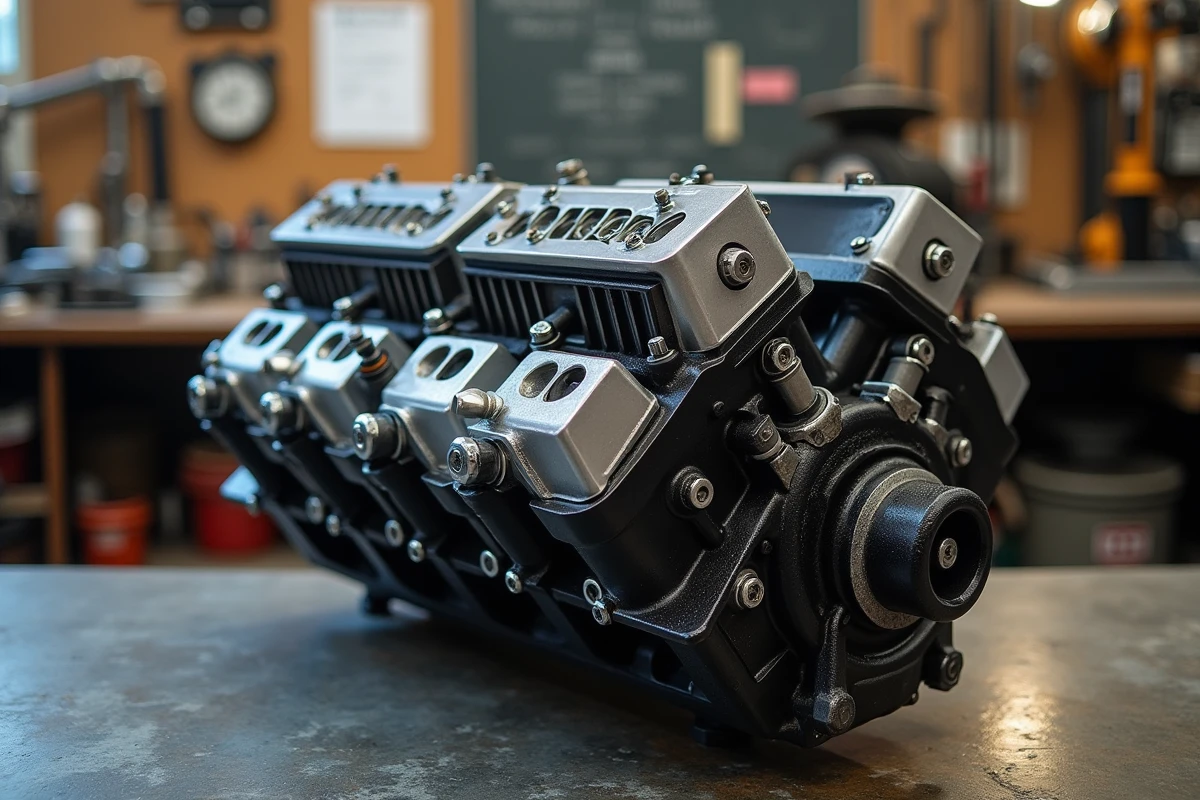
- Listen to the engine when cold: a metallic clattering at idle on a Twin Cam often indicates a worn timing tensioner or compensator. On an M8, this noise is much rarer.
- Check the level and color of the primary oil, distinct from the engine oil. A low level or blackish oil indicates neglected maintenance.
- Inspect for leaks at the head gaskets and cylinder base, especially on high-mileage Twin Cams. A slight trace of oil is not alarming, but an active leak requires intervention.
- Request the history of software updates. Harley-Davidson has issued several recalls and mapping corrections on early M8 models.
A well-maintained Twin Cam 103 or 110 remains a durable engine, capable of accumulating tens of thousands of kilometers without major intervention. However, we recommend prioritizing model years 2014-2016 for this architecture, a period when the main teething issues were addressed.
For a new or recent purchase, the Milwaukee-Eight 114 on a Softail platform currently represents the best compromise between mechanical reliability, maintenance costs, and versatility of use. The gains in cooling and the simplification of the timing make a difference in the long term, provided that oil change intervals are not neglected, which are shortened if the bike is primarily used in the city.